Free Structural Analysis Calculator
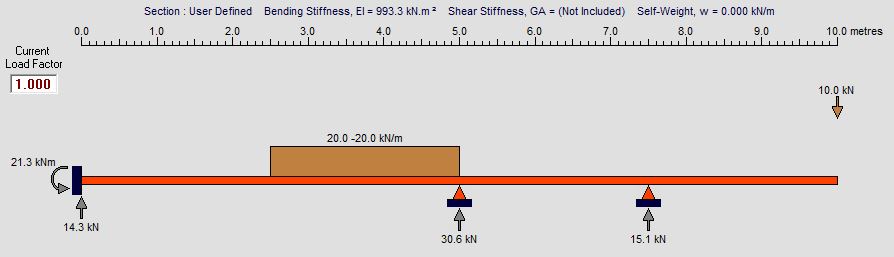
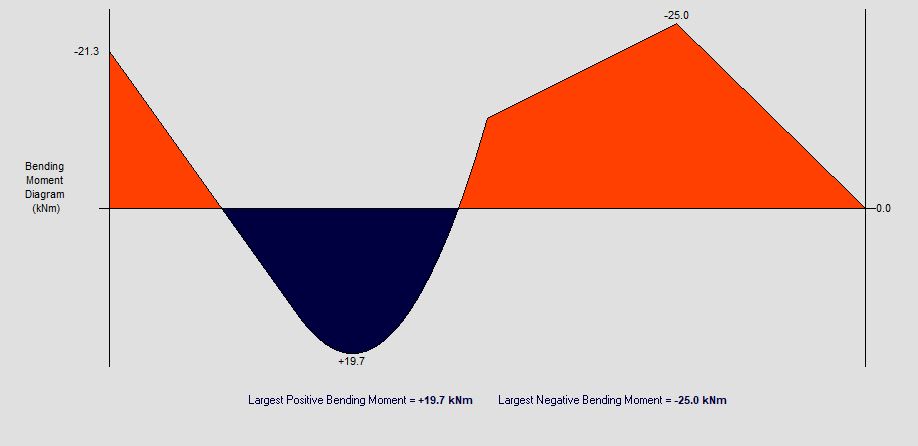
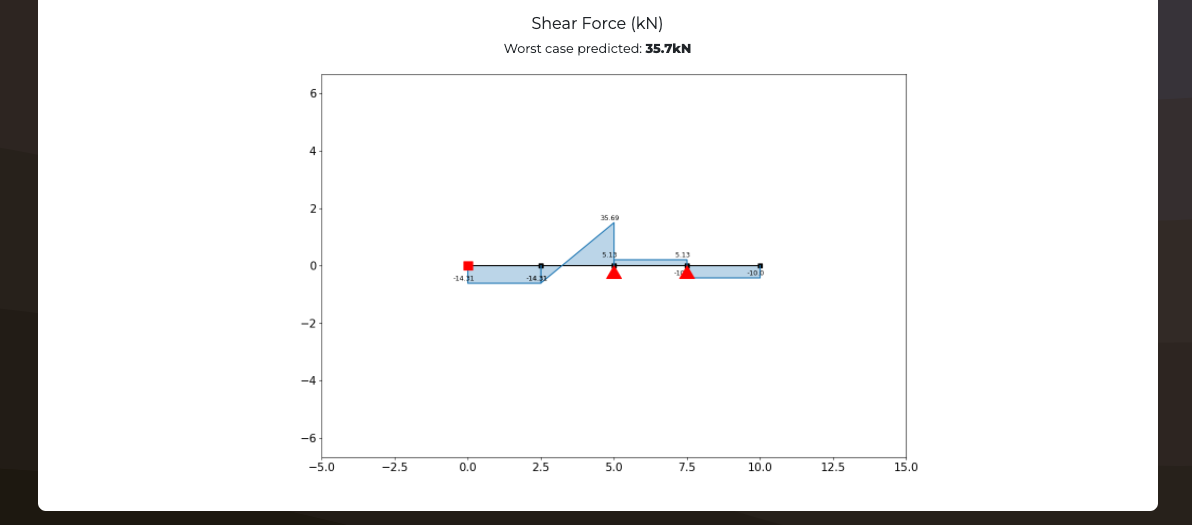
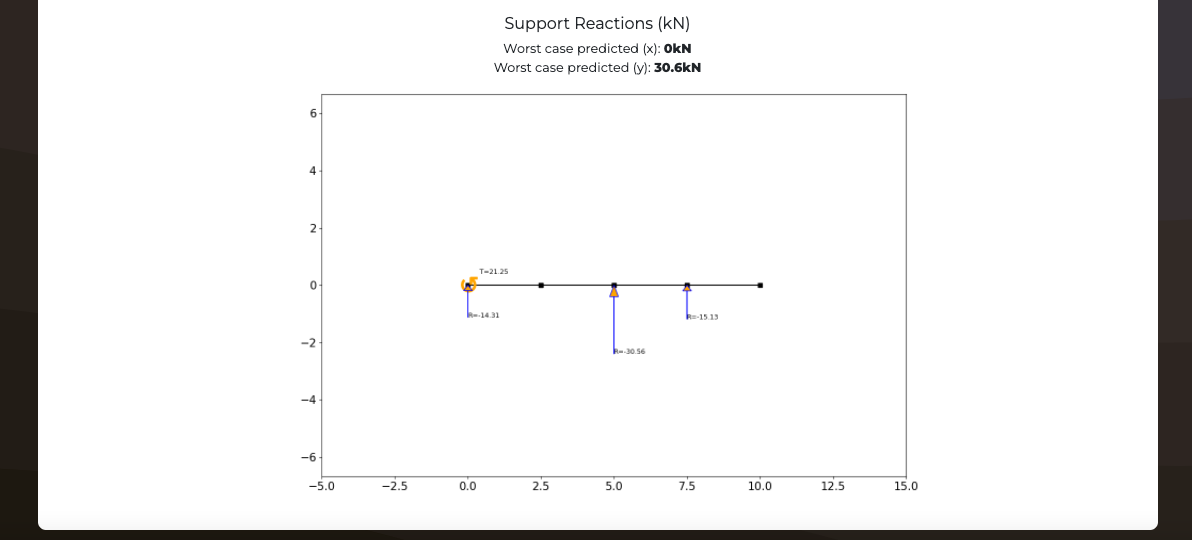
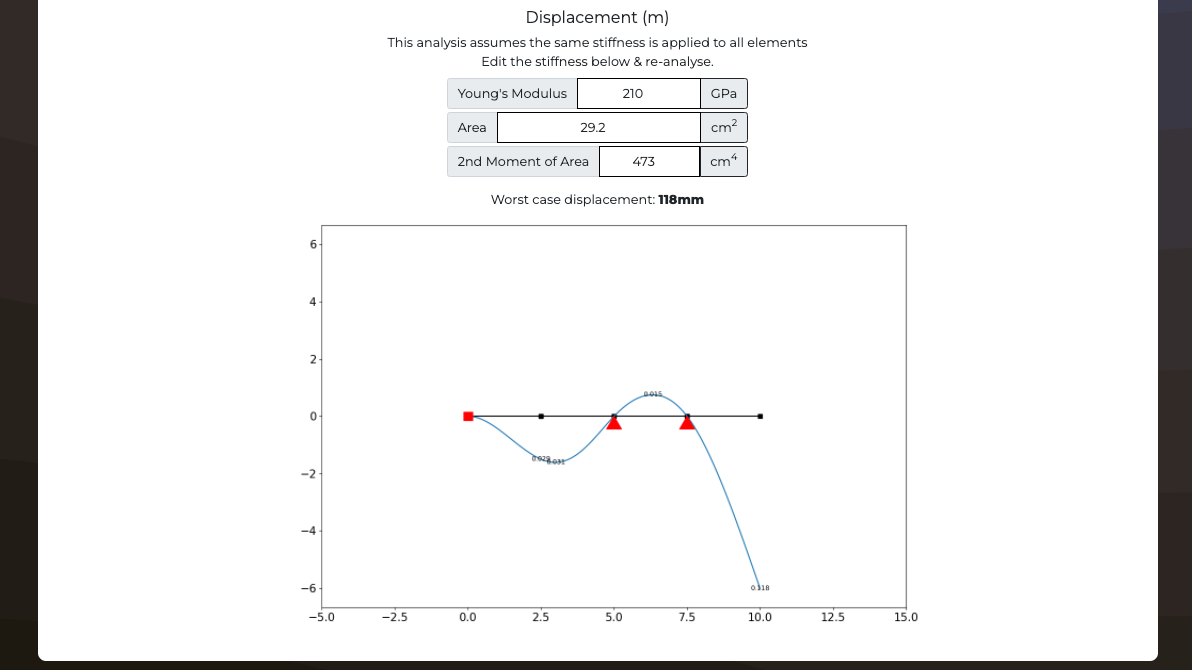
Generate bending moment diagrams, shear force diagrams and deflection for a 2D frame.
| Node | X Coord | Y Coord | Restraint |
|---|---|---|---|
| 1 |
m
|
m
|
|
| 2 |
m
|
m
|
| Element ID | Start node | End node | |
|---|---|---|---|
| 1 |
| ID | Applied to type | Applied to Node | Position on element | Load (x) magnitude | Load (y) magnitude | |
|---|---|---|---|---|---|---|
| 1 |
|
%
|
kN
|
kN
|
| Load ID | Element ID | UDL X magnitude | End X magnitude | UDL Y magnitude | End Y magnitude | Start position | End position | |
|---|---|---|---|---|---|---|---|---|
| 1 |
|
kN
|
kN
|
kN
|
kN
|
%
|
%
|
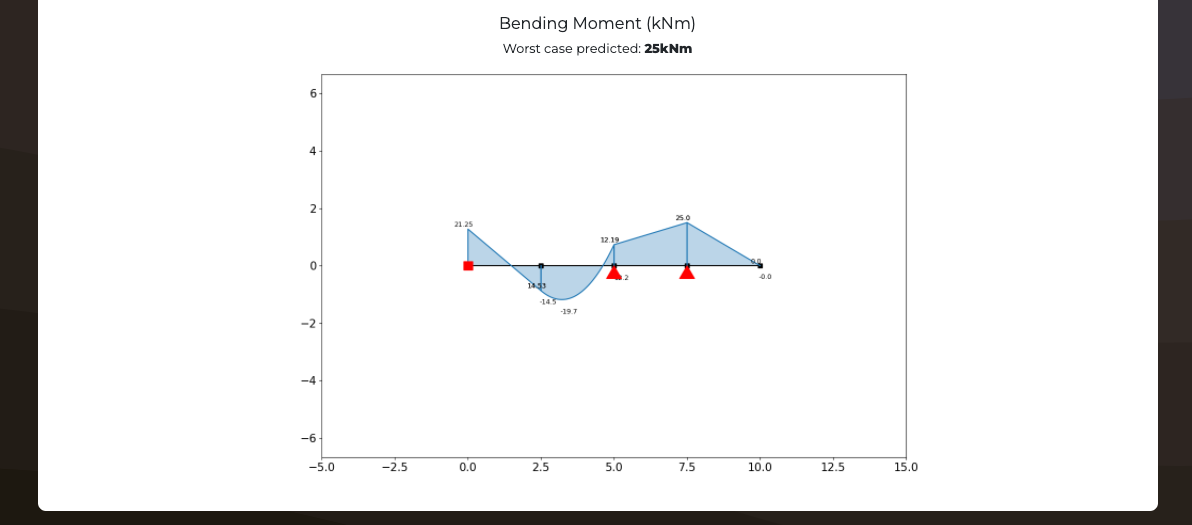
Bending moment result
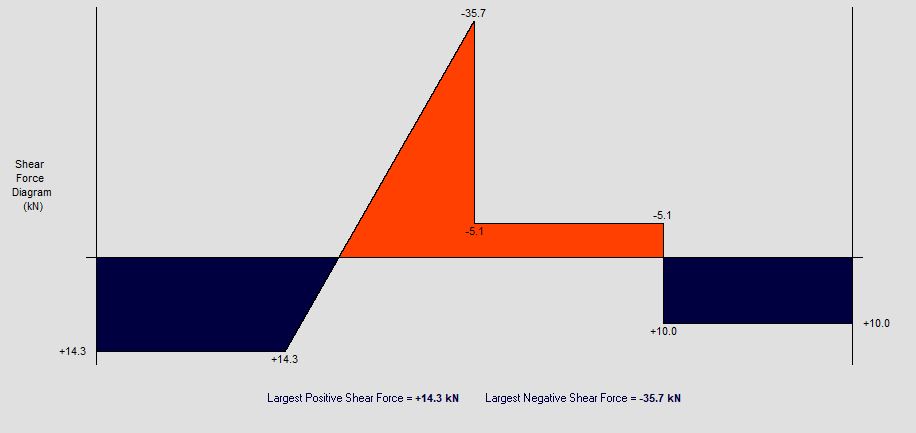
Shear force result
Axial force result
Support reactions result
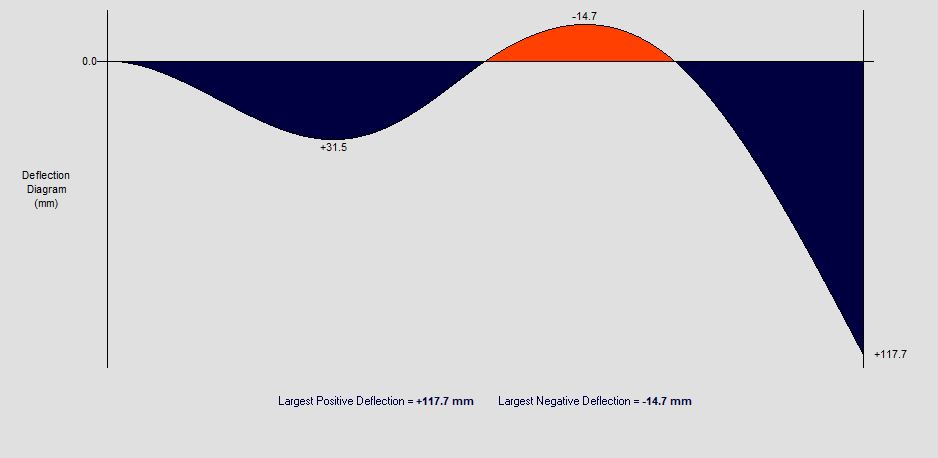
Displacement result
Analysis validation
How the frame analysis is solved
The frame is solved using the direct stiffness method: nodes and members are assembled into a global stiffness matrix and solved for nodal displacements and rotations under the applied load vector, from which bending moment, shear force, axial force and reactions are recovered member-by-member.
What's this calculator used for?
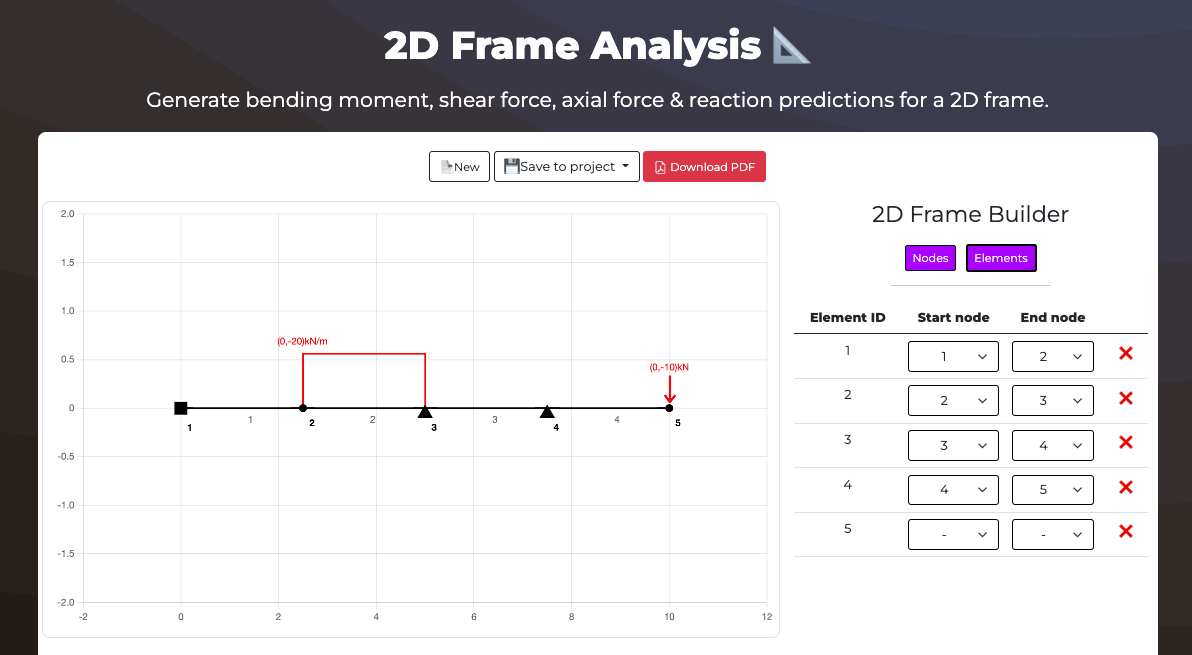
This free Structural Analysis calculator can be used by Civil Engineers to design 2D frame structures. This tool will generate and find the bending moment, shear force, deflection and reaction forces on the structure. Add nodes and members with stiffnesses before applying point loads or distributed loads to the frame and calculating results. The frame can also be analysed as a truss structure rather than a pin jointed frame.
Learn to build tools for yourself
Our Python for Civil Engineering certification walks you through publishing four tools like this one.
Enroll nowThis calculator is open source
Contribute to anaStruct on GitHub. Special credits: Ritchie Vink.
Interested in learning more about automation?
Enroll on our training certifications and learn how to code, build AI applications with no-code tools and automate tasks.
Learn more